Karnataka NEET UG 2026 Admissions & Stray Vacancy Hub
Everything candidates and parents need to successfully navigate Karnataka state medical counseling. Explore government and private college cutoffs across the 84 institutions in our predictor, calculate complete 5.5-year degree expenses, and simulate your priority list for the high-stakes KEA Mop-Up Round.
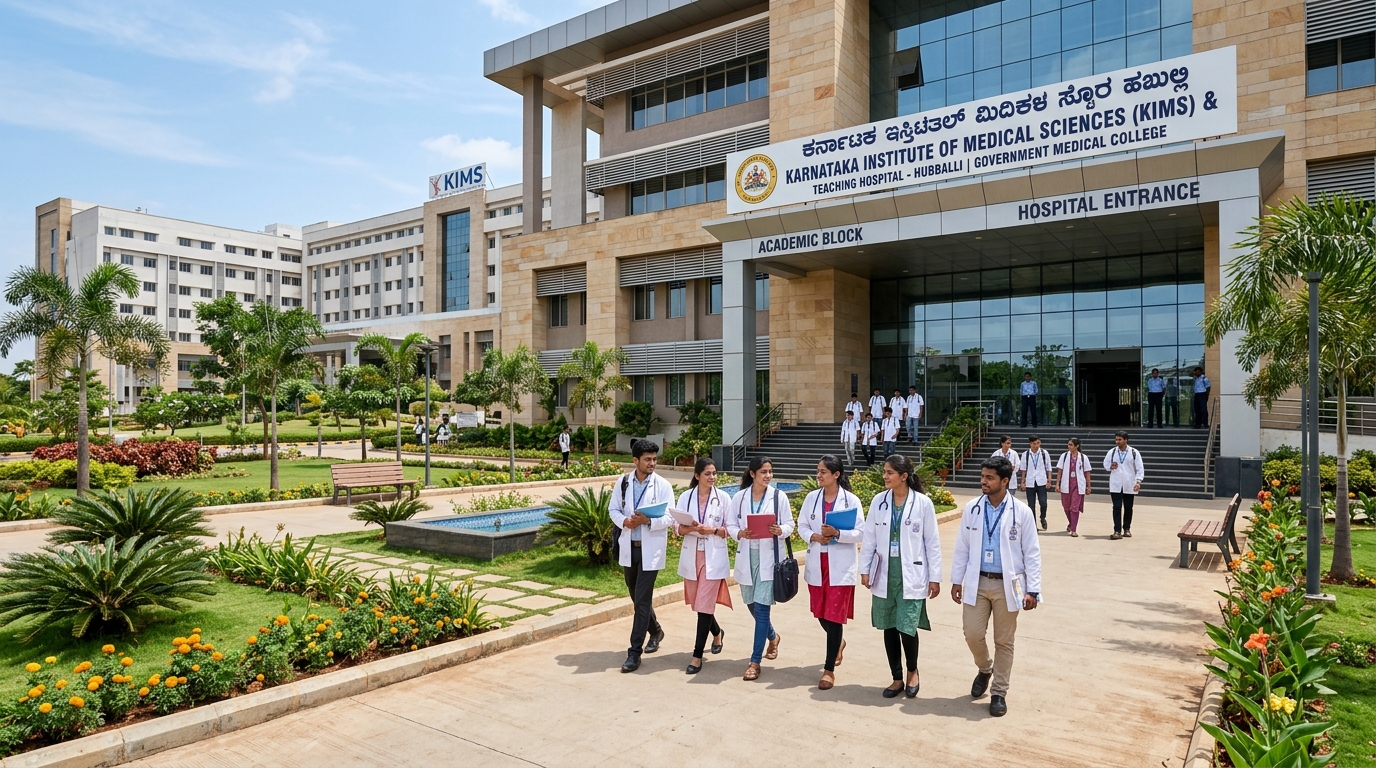
Karnataka Medical Campuses
KIMS Hubballi & 23 Government Medical Colleges statewide
2026 Counselling Closed & NEET UG 2027 Format Under Review
KEA's 2026 medical rounds have ended: online stray reporting closed on October 23, and the final AYUSH stray round (round 4) allotment came out on October 26, 2026. For 2027, the Education Ministry announced in May 2026 that NEET UG will be a computer-based test, but this is not final: the exam-reform task force now reports in January 2027, and media reports (November 2) say a pen-and-paper option may be kept alongside CBT. NTA's bulletin is expected around February 2027. KEA will still allot Karnataka state-quota seats on your NEET rank.
Specialized Karnataka Medical Tools
Allotment-rule simulators, estimated cutoff models, and fee calculators.
NEET Medical College Predictor & Simulator
Input your NEET AIR and reservation category. Search 84 colleges in our database (23 GMCs, 34 private medical, 13 dental, 14 AYUSH). Inspect 57,000+ hospital beds, daily OPD, and build an exportable KEA Option Entry worksheet.
5.5-Year MBBS Fee & Rural Bond Calculator
Calculate total gross expenditure across 4.5 years tuition and 1-year internship. Compare GMC (₹64k), Private Govt (₹1.54L), and Open GMP/OPN (₹10.9L–₹12.5L) rates. Offsets include ₹30k/mo stipend and ₹60k/mo rural salary.
Post-Allotment Choice Decision Engine
Compare Choice 1 (Freeze), Choice 2 (Float), Choice 3 (Surrender), and Choice 4 (Exit). Calculate fee forfeiture risks, seat retention rules, and Mop-Up eligibility rules.
Karnataka NEET UG 2026 Counseling Stages & Regulations
Detailed explanation of how the Karnataka Examinations Authority conducts state quota medical allotments.
Round 1 Allotment
First formal seat distribution. Candidates with high NEET ranks locked top government colleges (BMCRI, MMCRI, KIMS Hubballi) and premier private institutions.
Round 2 Allotment
Results published mid-September. Reporting concludes September 21. Upgraded choices confirmed and vacated seats re-allocated to Choice-2 and Choice-3 candidates.
Mop-Up Round
Concluded early October. Required ₹1,00,000 security deposit. Vacated seats and no-show slots moved to the stray vacancy round.
Online Stray Allotment & Reporting
Allotment declared Oct 20; reporting closed Oct 23 (5:00 PM). AYUSH stray round 4, the final round, was allotted on Oct 26. Non-reporting forfeited the tiered caution deposit.
Frequently Asked Questions: Karnataka NEET UG Counseling
What is the ₹1,00,000 Security Deposit rule for the KEA Mop-Up Round? ▼
To prevent seat blocking, KEA mandates that every candidate entering options in the Mop-Up Round must submit a refundable security deposit of ₹1,00,000. If a seat is allotted to you, you MUST report to the college. If you fail to report, your deposit is forfeited, a penalty of 5 times the tuition fee is imposed, and you are barred from KEA counseling for 2 years. If no seat is allotted, the deposit is refunded in full to your bank account.
Are Non-Karnataka students eligible for MBBS seats in Karnataka? ▼
Yes. Non-Karnataka candidates are eligible for the Open Private Quota (OPN Seats) in Karnataka private medical colleges. The annual tuition fee for OPN seats ranges from ₹10,92,602 to ₹12,50,000 per year. They do not require Karnataka domicile, but must register and verify documents with KEA under UGNEET.
Is the 1-Year Rural Service Bond mandatory for all MBBS students? ▼
Under the Karnataka Compulsory Service by Candidates Completed Medical Courses Act, 2012, all students who obtain a Government Quota Seat (in both Government Medical Colleges and Private Medical Colleges) must complete 1 year of compulsory rural service as a Junior Resident/Medical Officer with the Department of Health and Family Welfare. Students are paid regular government salaries (approx. ₹55,000–₹65,000/month). Private Open Quota (GMP/OPN) and Management Quota students are exempted.
What is the difference between GMP and OPN quotas in Karnataka? ▼
GMP (General Merit Private): Reserved for candidates with Karnataka domicile (studied 7+ years in Karnataka) applying for private medical college seats.
OPN (Open Merit): Open to all Indian citizens regardless of state domicile on pure All-India NEET merit.
Verified NEET UG Admissions Guidance & Legal FAQs
Authoritative answers on Karnataka state quota vs AIQ, rural service bond penalties, GMP vs OPN, and physical verification at Malleswaram.
Will NEET UG 2027 be a computer-based test (CBT), and does it change Karnataka MBBS counselling?
The Union Education Minister announced in May 2026, after the NEET UG 2026 paper leak and cancellation, that NEET UG will be held as a computer-based test from 2027. In November 2026 the exam-reform task force was given until January 2027 to report, and media reports say a pen-and-paper option may be kept for 2027 alongside CBT. NTA has not yet published the 2027 bulletin, so the format, shifts, normalisation and dates are unconfirmed. KEA will still allot Karnataka state-quota MBBS/BDS/AYUSH seats on your NEET rank through its own registration and counselling.
What is the minimum NEET score needed for BAMS (Ayurveda) government seats in Karnataka?
Candidates must achieve the minimum NEET qualifying percentile (50th percentile for GM, 40th for SC/ST/OBC). For government Ayurvedic colleges in Karnataka (like GAMC Bangalore/Mysore), general merit cutoffs range from 380 to 480 marks, while private college government quota seats close around 250–360 marks.
What is the difference between GMP and OPN quota in Karnataka private medical colleges?
GMP (General Merit Private) seats are reserved exclusively for Karnataka domicile candidates with regulated state fee caps (~₹11.88 Lakhs/year). OPN (Open Quota) seats are open to candidates across all Indian states with open fee bands (~₹11.88 Lakhs to ₹16.5 Lakhs/year).